
Composite Fences
Wood-look privacy fencing that doesn't rot, split or need staining.
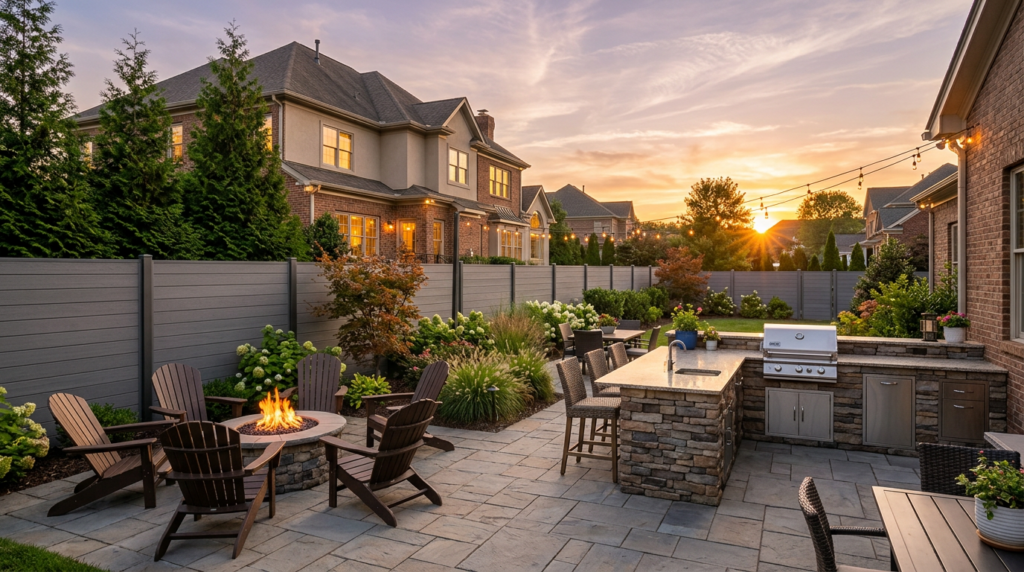
Composite fencing uses wood-plastic boards, usually in aluminum or steel posts. It won't rot or need staining, holds its shape in humidity and resists insects. It costs more upfront than wood or vinyl, gets warm in direct sun and still needs occasional washing to remove pollen and mildew.
Why Charlotte homeowners like it
- No staining every few years
- No rot in damp clay or shade
- Stable boards that stay straight
- A wood look that HOAs often approve
Things to know
- Heat: dark boards in full sun get warm to the touch.
- Cleaning: wash off pollen and mildew with soap and a soft brush.
- Weight: boards are heavy, so posts and gates must be designed for it.
- Repairs: a damaged board can be replaced, assuming the color is still available.
Popular designs
Horizontal boards in gray or brown with black aluminum posts are popular in Ballantyne, Blakeney and SouthPark-area remodels. See Mixed-width modern fences.
Questions Charlotte homeowners ask
Is composite worth the cost?
If you plan to stay a long time and hate staining, often yes. Over 15 to 20 years, avoided staining and repairs can offset the higher upfront price.
Does composite fade?
Most products fade slightly in the first months and then stabilize. Capped composite resists fading and staining better.
Reviewed by the 76 Fence Charlotte installation team. Updated November 2, 2026. Charlotte rules change, so confirm permits, CDOT, historic district and HOA requirements before you build. This page is general information, not legal advice.
Keep reading
- Vinyl vs. Wood Fences in Charlotte
- Split Rail Fences
- Picket Fences
- Semi-Privacy Fences
- Dog-Ear Privacy Fences
- Shadowbox Fences
Get a straight answer for your lot.
We check the line, the rules and the ground, then send a clear written quote. No dispatch fee.