
Pool Fence Installation
Pool barriers that look good and are built to pass inspection, in aluminum, steel, vinyl or wood.
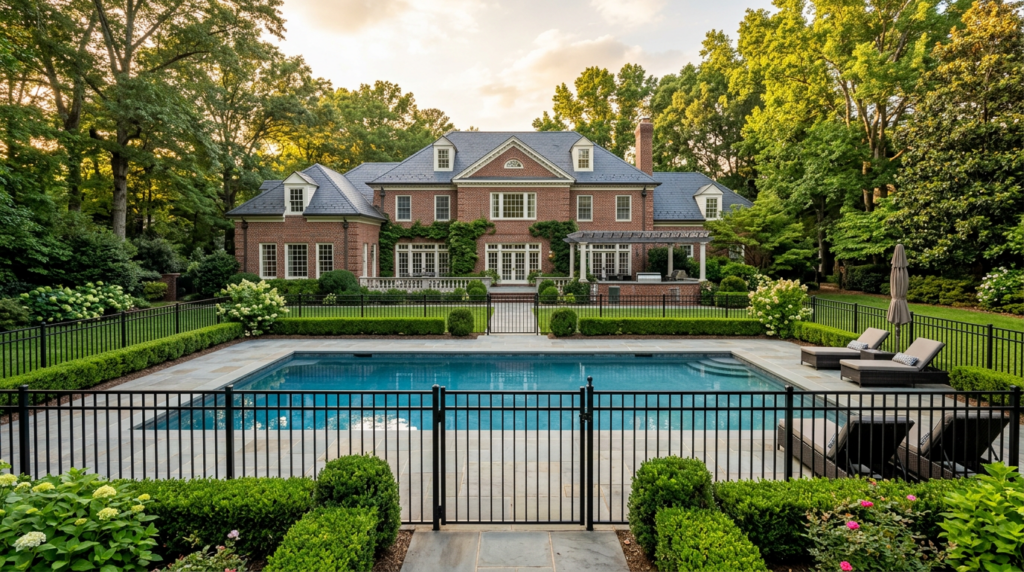
In Charlotte, residential pool barriers follow the North Carolina Residential Code (Appendix G, section AG105), reviewed as part of the pool permit. Core requirements include a barrier at least 48 inches high, limits on gaps and climbable footholds, and self-closing, self-latching gates that open outward away from the pool. Confirm current details with Charlotte-Mecklenburg Building Standards.
Barrier essentials
These are the main points we design to. Always confirm with your permit reviewer, because code editions and local amendments change.
- Height: at least 48 inches measured on the side away from the pool
- Bottom gap: limited clearance between the barrier and grade
- Openings: spacing small enough that a child can’t pass through
- Climbability: horizontal members spaced or placed so they don’t act as a ladder on the outside
- Gates: self-closing and self-latching, opening outward away from the pool, with the latch release placed high or shielded
- House walls: doors that open to the pool area may need alarms or other protection
Materials
- Aluminum: the most popular pool fence in Charlotte; open view for supervision and no rust
- Ornamental steel: for estate pools in Myers Park, Eastover and SouthPark
- Vinyl and wood: privacy-focused, built with the climbable side facing in
Timing
Pool contractors often need the barrier in place for final inspection. Tell us your inspection date at the estimate, so we schedule the fence right after the decking is done.
Community and apartment pools
Commercial pools follow different rules than private residential pools. See HOA and amenity fencing.
Read the full guide: Pool fence requirements in Charlotte.
Questions Charlotte homeowners ask
Can my existing privacy fence count as the pool barrier?
Sometimes, if it meets height, gap and climbability rules and every gate is self-closing and self-latching. Many older fences need gate hardware upgrades.
Do hot tubs need a fence?
Spas with a lockable safety cover are often treated differently. See our hot tub barrier guide and confirm with your permit reviewer.
What's the best pool fence material?
Aluminum is the most common: rust-free near chlorinated water and open for supervision. Vinyl and wood work for privacy if built to barrier rules.
Reviewed by the 76 Fence Charlotte installation team. Updated November 2, 2026. Charlotte rules change, so confirm permits, CDOT, historic district and HOA requirements before you build. This page is general information, not legal advice.
Keep reading
- Ornamental Steel & Wrought Iron Fences
- Commercial Fencing
- Driveway Gates
- Garden & Deer Fences
- Fences on Retaining Walls & Slopes
- Aluminum Fence Installation
Get a straight answer for your lot.
We check the line, the rules and the ground, then send a clear written quote. No dispatch fee.