
Fence Posts and Tree Roots
Building near Charlotte's big oaks without hurting the trees or the fence.
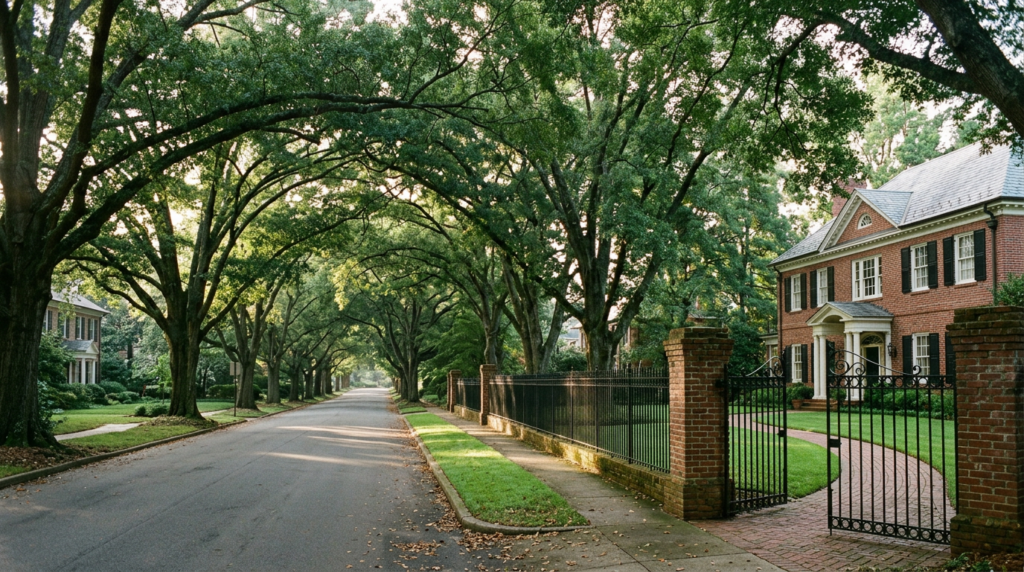
Most tree roots live in the top 12 to 18 inches of soil and spread far beyond the canopy. To protect a tree, hand-dig post holes near it, shift posts to avoid roots larger than about 2 inches, keep fence lines away from trunks, and don't pile soil or concrete washout on the root zone.
Practical steps
- Mark trunks and estimated root zones before layout.
- Hand-dig the first few inches near trees to find roots.
- Move a post rather than cutting a major root.
- Use a longer rail span or a header to bridge a big root.
- Keep at least a foot or more of clearance around trunks.
When roots have already lifted a fence
We reset or replace tilted posts and reroute the line around the trunk.
Protected trees
Street trees in the right-of-way are city-owned and protected. Some trees on private property may also be protected under development approvals. If unsure, ask the city before cutting roots.
Related: Street trees and planting strips.
Questions Charlotte homeowners ask
Will tree roots push my fence over?
Over years, growing roots can lift or tilt posts. Leaving room around trunks prevents most of it.
Can I attach a fence to a tree?
No. Trees grow and sway; nails and brackets damage the tree and the fence.
Reviewed by the 76 Fence Charlotte installation team. Updated November 2, 2026. Charlotte rules change, so confirm permits, CDOT, historic district and HOA requirements before you build. This page is general information, not legal advice.
Keep reading
- Does a Fence Add Value to a Charlotte Home?
- Fences Near the Lynx Light Rail
- Reading Polaris GIS for Fences
- The CDOT Fence and Wall Certificate
- How to Find Your Property Line in Mecklenburg County
- Charlotte Fence Height Limits
Get a straight answer for your lot.
We check the line, the rules and the ground, then send a clear written quote. No dispatch fee.