
Dog-Ear Privacy Fences
Charlotte's most common privacy fence: affordable, HOA-friendly and easy to repair.
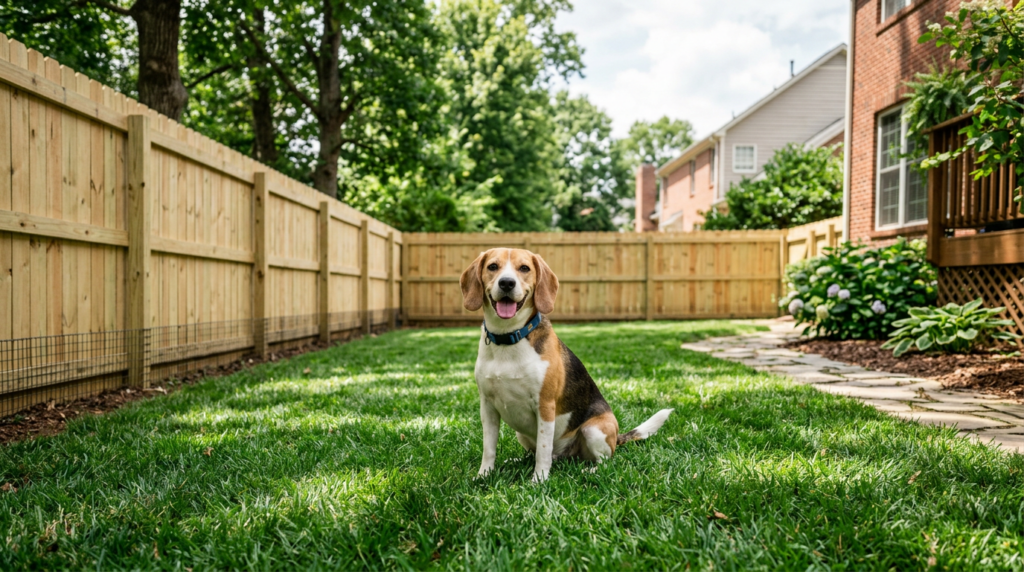
A dog-ear fence has pickets with clipped top corners, usually 6 feet tall in pressure-treated pine. It's Charlotte's most common backyard fence because it's affordable, widely approved by HOAs and easy to repair. Its main weakness is small gaps that appear as pickets dry and shrink.
On this page
Why people choose it
- Lowest cost per foot for wood privacy
- Accepted by most HOAs
- Easy to replace a single picket
- A familiar, tidy look
Make it last
- Ground-contact posts set below the frost line
- Pickets held off the ground
- Three rails at 6 feet
- Stain once the wood has dried. See When to stain a new pine fence.
Upgrades
- Cedar pickets on pine posts and rails
- A top cap and trim
- Steel-framed gates
- Black hardware
Pine vs. cedar
See Cedar vs. pine for Charlotte fences.
Flat-top vs. dog-ear
Flat-top pickets give a cleaner modern look, especially with a top cap. Dog-ear remains the traditional choice.
8-foot dog-ear
In established rear yards, 8-foot fences are generally allowed with a permit.
Gates
Steel-framed gates prevent sagging.
Questions Charlotte homeowners ask
Can a dog-ear fence be 8 feet tall?
In an established rear yard, the UDO generally allows up to 8 feet, with a building permit required for fences over 6 feet. Check HOA limits too.
Why is my new dog-ear fence showing gaps?
New treated pine is wet. As it dries, pickets shrink. Board-on-board avoids this.
Reviewed by the 76 Fence Charlotte installation team. Updated November 2, 2026. Charlotte rules change, so confirm permits, CDOT, historic district and HOA requirements before you build. This page is general information, not legal advice.
Keep reading
- Aluminum vs. Steel Fences
- Vinyl vs. Wood Fences in Charlotte
- Semi-Privacy Fences
- Board-on-Board Fences
- Picket Fences
- Mixed-Width Modern Fences
Get a straight answer for your lot.
We check the line, the rules and the ground, then send a clear written quote. No dispatch fee.